.png)
our blogs
How SWIMSIDE in Manila exposed the growing divide between access, visibility, and modern fandom culture.
What's new
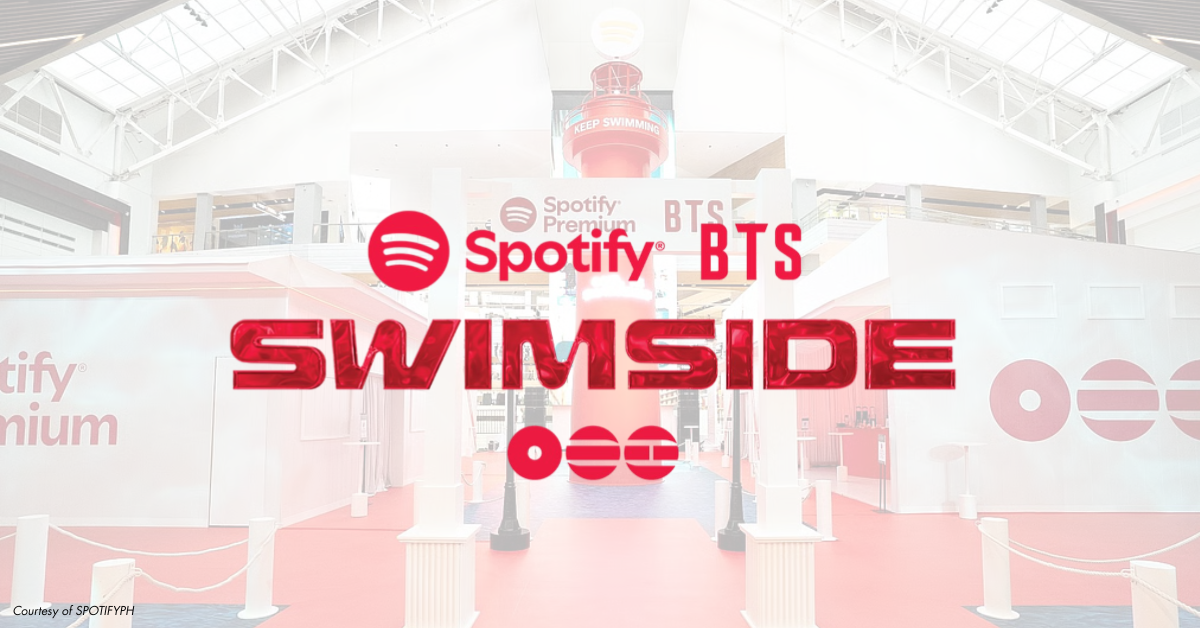
How SWIMSIDE in Manila exposed the growing divide between access, visibility, and modern fandom culture.
By Raeneil Inocencio

After their hiatus of nearly 4 years because of their military service, BTS comebacks always feel like a reset button for fandom culture, something long waited for, almost yearned for in silence, like a familiar voice finally returning after a long absence, especially for their fans, ARMY.
Every era carries its own energy, but the recent ARIRANG album felt especially meaningful in how it brought together sound, storytelling, and emotion in a way only BTS can. Their release was another shared moment for ARMYs worldwide, something to experience together rather than just listen.

So when SWIMSIDE in collaboration with SPOTIFY was introduced in Manila as part of their rollout, it immediately felt like more than just a marketing activation. It was positioned as an immersive extension of ARIRANG—a space where fans could physically step into the album’s world. And in fairness, that intention was clear the moment you entered. The rooms were built to be walked through and each area felt like a different layer of the album translated into space.
And for many fans, that alone already mattered. And honestly, as a fan myself, I understand why. There is still something exciting about seeing fandom spaces built at this scale in the country, especially for a community that has spent years supporting from screens, timelines, and shared online spaces alone.
Because there’s still something different about seeing a fandom space built at scale in the Philippines. It reflects how deeply fan culture has evolved locally, and how deeply people connect to experience built around music and identity. Inside SWIMSIDE, you could feel that excitement—fans taking photos, reacting, and moving through spaces that felt made for them.
It was, in many ways, a well-built experience.
But like most modern fan activities, the real story didn’t end inside the venue. It continued online.

Content from SWIMSIDE spread quickly—walkthroughs, reactions, edits, and curated moments filled social feeds almost instantly. And that’s where you really see how fan experiences have changed. Today, an activation doesn’t exist physically. It exists in how it is shared, reposted, and remembered online. The event becomes both a space and a stream of content.
That part worked exactly as expected. But alongside that visibility came a quieter, more uncomfortable conversation. Access.
This was the part I kept thinking about even after the event ended online. Because even while seeing the frustrations around limited access, I also understood why so many fans still desperately wanted to participate. The activation represented proximity—not just to BTS, but to the kind of fandom experience Filipino fans rarely get at this scale.
Many fans shared how difficult it was to secure slots, how quickly registration filled, and how limited availability felt compared to demand. At the same time, posts from invited creators and public figures circulated widely, making the contrast between those entered and those who didn’t much more visible.
And that contrast is where the conversation shifted. Because this isn’t unfamiliar.
In the Philippines, there is already an underlying awareness that access doesn’t always feel equal. Whether in events, opportunities, or systems in general, there’s often a sense that visibility or connections can make things easier for some than others. So when fans saw a highly limited, high-demand fan event paired with visible influencer attendance, it didn’t feel like an isolated issue.
It felt like a pattern people already recognize. In the middle of that tension, another layer surfaced online—the “touch grass” remark.
What is usually a throwaway internet phrase meant to suggest stepping away from online discourse landed very differently when echoed in this context. For many fans, it didn’t feel like light commentary—it felt dismissive.

Because for ARMYs, the frustration around SWIMSIDE wasn’t coming from nowhere. It came from years of showing up—streaming, supporting, and waiting through long gaps between comebacks while treating every fan experience as something meaningful.
As someone who has been part of ARMY since 2014, I think that is also why the frustrations around SWIMSIDE felt deeply personal for many fans. BTS has been part of people’s lives for years—not just casually, but consistently. And now that many fans are older, working, and balancing real-life responsibilities, making time for these experiences already requires effort.
That is why, even while dealing with reality outside fandom, many still tried to participate. So when questions about fairness and access surfaced, the frustration felt understandable. For long-time fans, it was never just about entering an event—it was about finally getting the chance to feel included in something they had spent years emotionally investing in.
So when concerns about access, privilege, and fairness were met with “touch grass,” it felt like those concerns were being reduced to something trivial.
To some, it may have sounded like a reminder to step back from online discourse. But to others, it felt like being told to disengage from something they’ve consistently invested time and emotion into highlighting the gap between how fandom is experienced from the outside and how deeply it is lived on the inside.
Still, it’s important to understand how these systems are built.
In today’s marketing landscape, visibility is part of the strategy. Inviting creators and public figures is expected. They extend reach, generate content, and keep events alive long after they physically end. From a brand perspective, that is how amplification works now.
But fandom spaces don’t operate on that same logic. For ARMYs, they are emotional spaces built on years of support, shared identity, and collective meaning. So when something is framed as “for fans,” there is an expectation that fans feel prioritized in access and experience.
SWIMSIDE didn’t fail as an activation. In fact, it succeeded in what it was designed to do. But it also exposed something important where fan culture is headed. We are now in a space where experiences are designed for two audiences at once: the community inside the fandom, and the broader visibility outside it. And those two audiences don’t always want the same thing. One values access and belonging, the other values reach and amplification. And when that happens, perception becomes part of the experience itself.
Still, it’s worth being careful not to reduce everything to blame. The system is bigger than individuals, and most of the friction comes from how these activations are structured, not who attends them.
If anything, what SWIMSIDE really shows is this: fan experiences today are no longer just about participation. They are about distribution of access, of visibility, and of attention. And those are not balanced clearly, even a well-executed event can leave behind mixed feelings.
At its best, SWIMSIDE gave fans a space to experience ARIRANG beyond sound. At the same time, it reminded us that fan culture today is constantly negotiating between two worlds—one built in emotional connection, and one built on visibility.
And as a fan myself, I think that is the part worth reflecting on most.
Because in the end, the strongest fan experiences are not just the ones that look good online, but the ones that still feel fair when you are standing outside looking in.

.jpg)
.jpg)

.png)


.jpg)

.png)


.png)

.png)


.png)
.png)


.png)
%20(1).jpg)

-min.png)

.jpg)


.jpg)
.png)
.png)
.png)


.jpg)

.jpg)
.png)
.png)